Task 1 – Influential graphic design example from the history of design.
In 1964 Ken Garland and a group of designers dropped the ‘first things first’ manifesto. Their point was to stop using design talent to sell shampoo, cat food, cigarettes etc. Instead put their skills towards education, culture, public information, things that actually mattered. This manifesto wasn’t just used during this time and era, it was in fact revived again in 1999 as ‘first things first 2000’. Also again in 2014 and 2020 tackling digital ethics, climate collapse, racial injustice and mental health. Every version of this manifesto reminds us that design shapes society and that it is never neutral.
Timeline of Revivals
- 1964 (Original): Written by Ken Garland and signed by 22 designers, it challenged the “Mad Men” era of advertising and called for a return to “socially useful” design.
- 2000 (First Revival): Published in 1999 as First things first 2000, this version was spearheaded by Adbusters magazine. It updated the original’s critique to include global branding and marketing, gaining signatures from 33 prominent designers such as Milton Glaser and Ellen Lupton.
- 2014 (Second Revival): Launched by designer Cole Peters to mark the manifesto’s 50th anniversary. This iteration shifted focus to the digital realm, addressing privacy, surveillance, and the ethical responsibilities of designers working in tech.
- 2020 (Third Revival): The 2020 Edition was written by a new collective including Namita Dharia and Marc O’Brien. It is considered the most radical version, explicitly linking design to the climate crisis, social justice, and institutional racism.
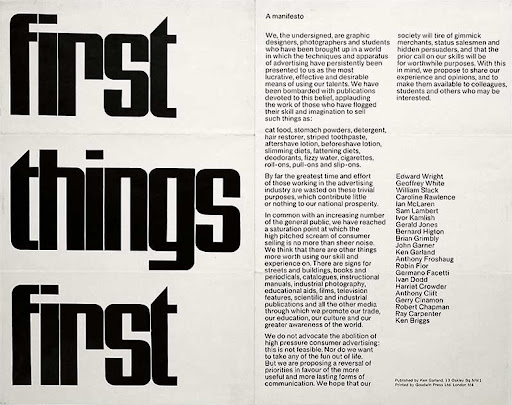
This manifesto is considered a “design for good” document because it argues that design should prioritize human, social and environmental needs over commercial, profit-driven advertising. It calls on designers their time to education, information design, charitable causes, street signs and scientific publications rather than high-pressure advertisement. The manifesto forced designers to consider their professional ethics, moving beyond aesthetic considerations to look at the consequences of their work. It highlighted the responsibility designers have to create meaningful communication rather than contributing to the consumer selling.
Task 2 – Influential contemporary graphic design example which evidences design for good.
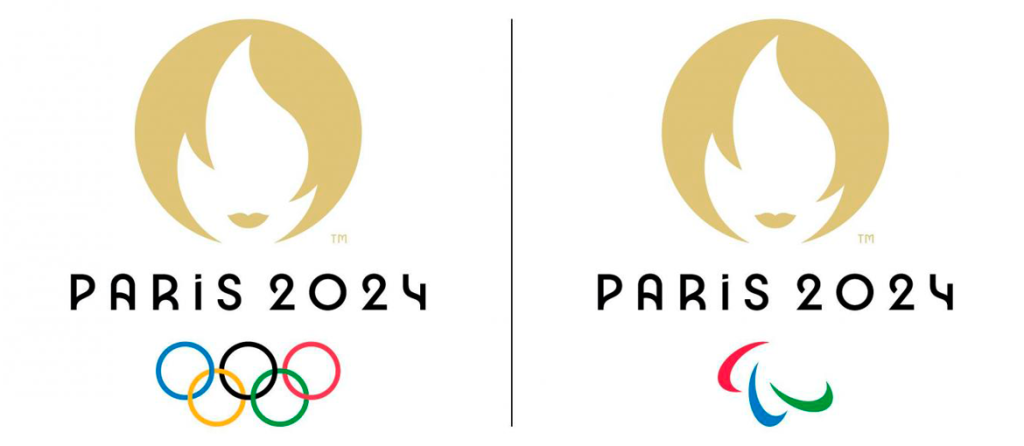
The Paris 2024 Olympic identity is considered a landmark example of “design for good” as it is intentionally prioritised social equity, sustainability and inclusivity as core brand requirements rather than secondary features.
For the first time in history, a single emblem was used for both the Olympic and Paralympic Games. This design choice aimed to eliminate the perceived hierarchy between the two events, asserting that they are instead one single project under the same banner.
The Paris 2024 Olympic pictograms are considered a “design for good” primarily because they prioritize inclusive, shared identity and sustainability over purely functional signage. Unlike human figures, the Paris 2024 Olympics redesigned the pictograms as coat of arms. To represent collective sporting rather than just physical action. By removing human figures entirely the designs avoid depicting specific genders or body types. This allows ‘any’ athlete regardless of gender to see themselves in the symbol. The visual language incorporates elements of nature (wavy lines for water) and French urban heritage to advocate for environmental awareness.
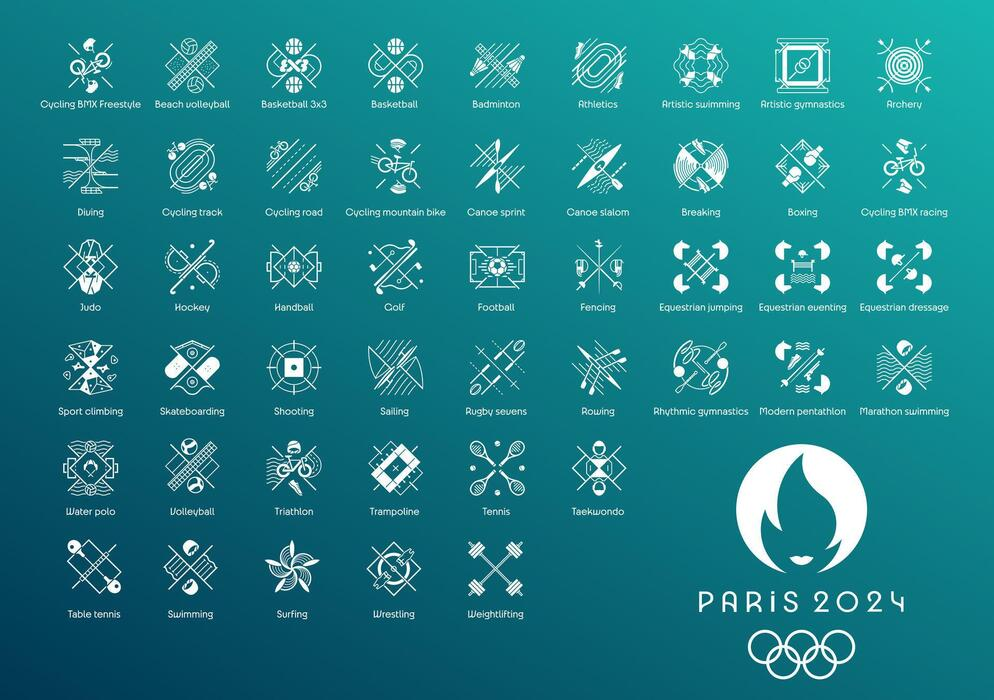
For the Paris 2024 Games, the Olympic and Paralympic Games share eight identical pictograms, known as “badges of honor” representing sports that use the same equipment or playing field. This reflects a commitment to treating both events with equal status and fostering a single diverse community.
Task 3 – Collaborative workshop
For the collaborative workshop task we were paired into groups of two to come up with some initial ideas on how we would tackle the brief “How can graphic design highlight the benefits of the outdoors and fresh air, and encourage positive societal change in an age influenced by digital technology?”. I set up a Figma board and we created bullet point lists to break down how the best way to approach the brief would be. To start off me and Noah began to discus our target audience before thinking of creative design choices. We chose the 14-29 age group, and since we are in that age range ourselves we would be able to use our own experiences as key examples.
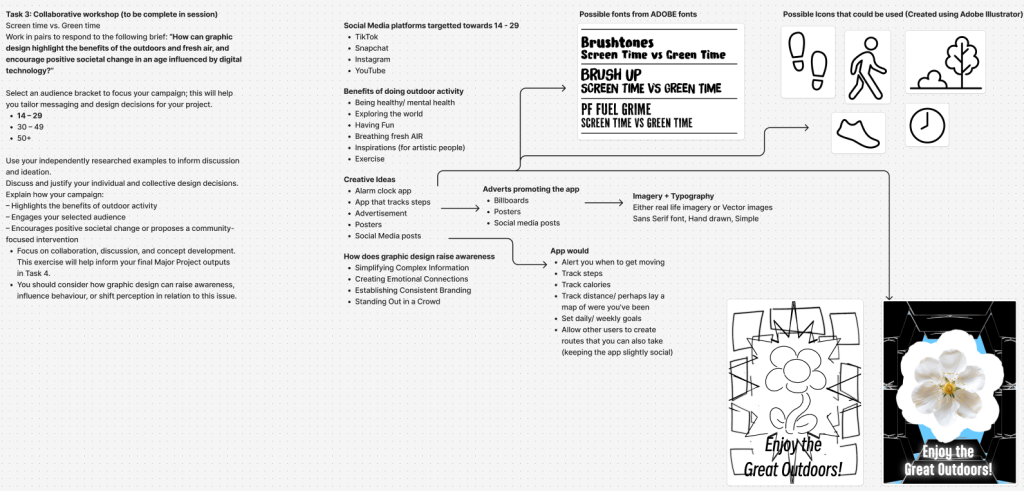
The first idea we came up with would consist on an alarm clock as to alert the user when to come of their devices. With that idea in mind, we put our focus towards an app designed to alarm the user to put down the phone away and go out, perhaps to do something more constructive. Even though the users may forget they have the app installed, the idea of it being an alarm app would mean it would be able to remind them of the purpose of installing the app in the first place.
Other than only making an app, our other ideas was mostly creating poster, advertisement or social media posts. So once me and Noah had our initial ideas we split of and focused our work into making rough concepts for our deigns. I made some simple yet sleek icons in Adobe Illustrator that could possibly be used withing the alarm app. I also sourced some of our chosen fonts and set up a preview of them using Adobe Illustrator as well. Whilst Noah made some posters designs that could also be incorporated into social media posts. For the designs and imagery, we decided that hand drawn and real-life imagery would be best. Our choice of typography would only consist of sans serif fonts as they will keep a friendly/ inviting look to our designs.
Overall, it was a great learning experience working with someone else. It allowed us to understand the importance of team working within a graphical environment. And just how much easier the work can be completed when your two minded rather than tackling the brief by yourself. This had definitely improved my experiences with working in a group.
Task 4 – Major Project Brief
References
Garland, K. (1964) First Things First. [online] Available at: https://designmanifestos.org/ken-garland-first-things-first/ (Accessed: 13 February 2026).
International Olympic Committee (2023) Paris 2024 Olympic Pictograms. [online] Available at: https://www.olympics.com/en/galleries/p2024-olympic-pictograms-en (Accessed: 13 February 2026).
0 Comments