One of my main challenges I encountered while trying to integrate Tufte’s five theories into my 3D animation was the difficulty in separating his concepts related to data from the specific context of animation itself. Tufte’s theories primarily focus on how to present data effectively. However, applying these principles to animation requires a different approach, as animations involve movement and transitions.
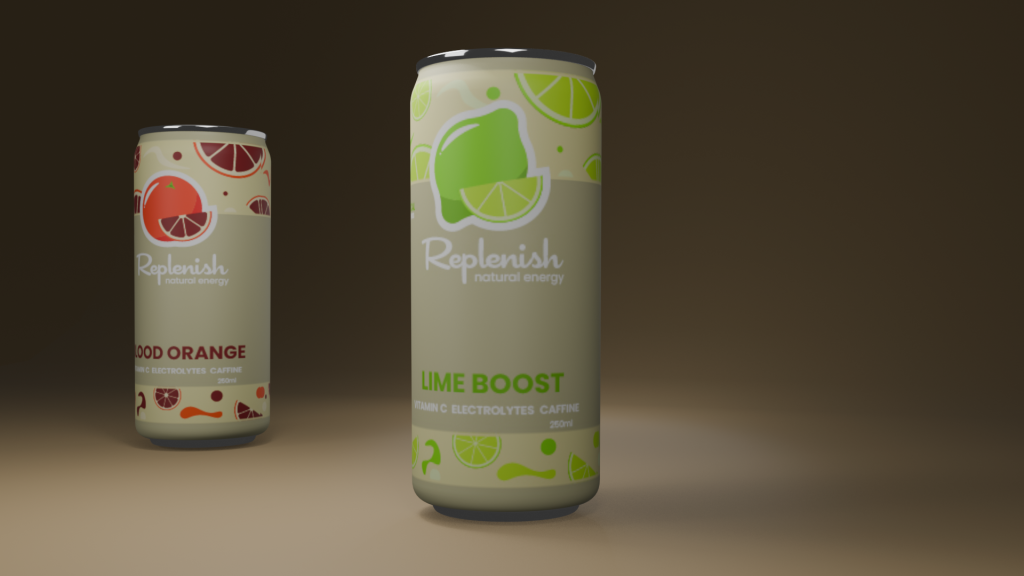
As I mentioned I wanted to incorporate Tufte’s theory on the use of colour. The best way to present it was the choice of colours for the drink cans, and what colour the backdrop was. “For example, brighter colours can highlight crucial data, while tones can serve as background elements, ensuring that the focus remains on what matters most (energy drink)” is what I said about the use of colours. I kept a majority of the colours beige, using different tones and hues to create a more memorable brand/ house style. Whilst adding a variety of light types in blender helped the viewers understand what is the most important elements in frame. Because the lights are only focused on the drink cans that darkens the rest of the backdrop, as it not as important as anything else so the audience have no reason to look there.
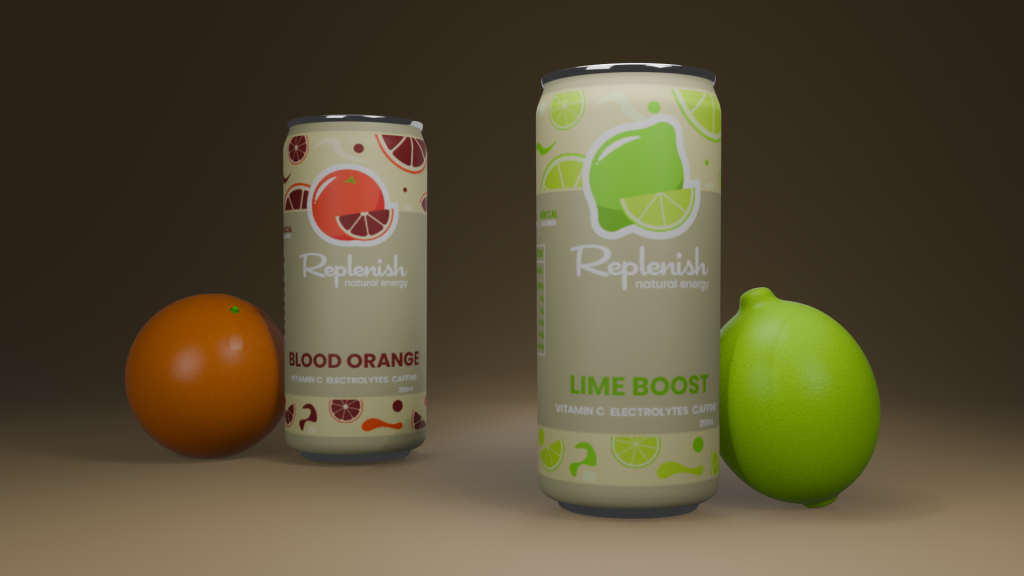
In my 3D animation, I successfully applied the other theory I researched by Tufte’s on small multiples, which emphasizes the importance of using multiple visuals to present comparison. I showed this concept through the use of energy drink cans in my animation. By placing one can further away from the camera than the other, I created an illusion of size difference, making the can in the background appear smaller despite being the same size as the one in the foreground. This technique is effective because it allows viewers to understand the concept of comparison more effectively. As the audience observes the two cans, they can easily link the visual relationship between them, thanks to the perspective created within the camera frame. This approach not only enhances the visual appeal of the animation but also reinforces the message I aimed to convey about the products being compared.
Using small multiples in this way aligns with Tufte’s principles by providing a clear and concise method for presenting data. It encourages viewers to engage with the information actively, as they can visually analyse the differences and similarities between the two cans.
0 Comments