Reflecting back on Edward Tufte’s five theories I had to think about how I could incorporate any of them into my 2D animation. Unlike last time when it was for 3D animation. Integrating some of theses principles may mean I have to revisit my initial plan. It could involve re doing the narrative, simplifying the design elements or the animation flow in total. The main goal of using these theories is to create an animation that is considered appealing and also clear at conveying the messages about the sustainable subject.
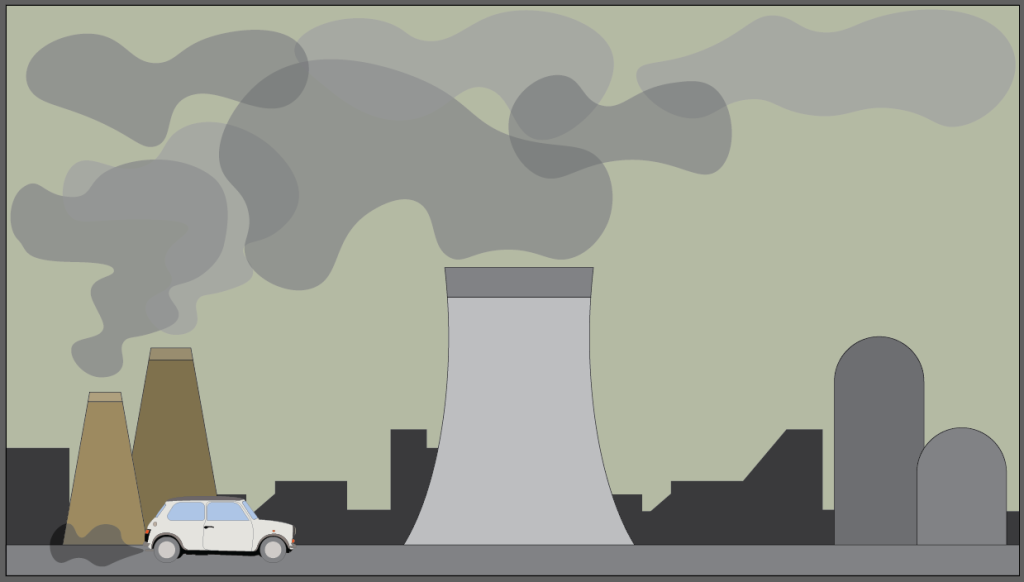
One of Tufte’s theories I used was his theory on small multiples. Small multiples allow viewers to compare different data sets side by side, making it easier to identify patterns and trends. By using small multiples, designers can showcase changes over time. Each graphic is similar in design, which creates a visual narrative, allowing the audience to focus on the data and not distracted by anything else.
In addition to using Edward Tufte’s theory on small multiples I also focused on his theory on the use of colour. I researched this theory last time we had to incorporate his work and Edward Tufte presents the best examples of this concept seen in old map designs and layouts. Because the different colours, hues, and saturations connote information about the terrain and depth of bodies of water, I used it for the my background and further background. For example, the darker shades in my opening scene is the city way in the distance (not really important) while the lighter shade buildings/ cooling tower represent closer structures. This use of colour helps viewers quickly grasp the landscape’s features without needing much explanation.
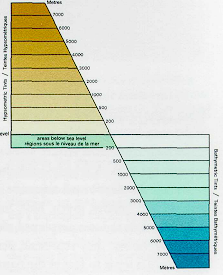
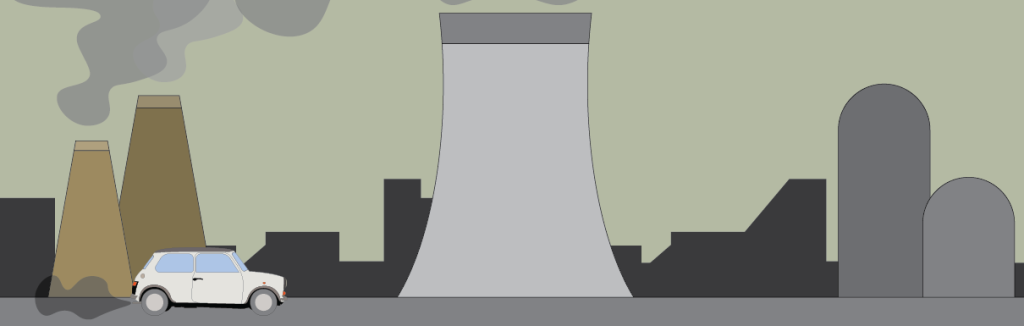
Colour choices are key to guiding the viewer’s eye and boosting attention in my animation. By using specific colours, I created visual hierarchies that highlights more important elements of information. Brighter colours can draw attention to crucial data (for my example the cooling towers), while muted tones and hues can serve as background elements (the dark city behind everything), ensuring the focus remains on what’s most important
REFERENCES
Tufte, E.R. (1990) Envisioning Information. Cheshire, CT: Graphics Press, p.91.
0 Comments